
Lycoming Parole Versus Probation
Parole and probation are both forms of community supervision, but they begin in different ways. Probation is a sentence or part of a sentence imposed by the court. It can exist without any prior prison term. Parole is conditional release from confinement while the sentence continues. Neither status alone shows that every case or legal duty has ended.
Pennsylvania divides parole authority by sentence. The Pennsylvania Parole Board decides parole for state sentences within its jurisdiction, and PA DOC handles state parole field supervision. For an applicable county term, the Lycoming sentencing court controls county parole under 42 Pa.C.S. §§ 9775–9776. The county adult probation and parole structure carries out the supervision ordered by the court.
| Status | How it begins | Lycoming verification |
|---|---|---|
| State parole | Board release from a state sentence | PA DOC locator and public Board action |
| County parole | Court-authorized release from a county term | Lycoming docket, filed order, county office |
| Probation | Court sentence or sentence component | Lycoming docket, order, county office |
- Parole
- Conditional release from confinement while a sentence continues.
- Probation
- Court-ordered supervision that may occur without prior confinement.
- Discharge
- The formal end of a supervision term.
- Absconder
- A supervised person alleged to have stopped reporting or evaded supervision.
Verify Lycoming Post-Release Supervision
Begin with the sentencing docket. It identifies whether the confinement was a county or state term and can show probation, county parole, sentence credit, or later orders. One person may have several cases, so inspect each plausible docket. A state locator result cannot replace a county probation order, and a county court record cannot establish the current location of a state parolee.
- Search the UJS Case Search and filter known criminal cases to Lycoming County.
- Read the sentencing and later entries for probation, county parole, state commitment, or discharge.
- For a state sentence, search the PA DOC Inmate/Parolee Locator by DOC number or name.
- Confirm whether the result lists an SCI, parole status, or a responsible district office.
- Obtain the filed order or public Board action when the summary does not settle the question.
- Use the correct office only for routing and general process questions.
The PA DOC locator is updated daily and covers department-supervised parolees. A parole district-office location supports state supervision, while an SCI location means institutional custody continues. The locator excludes county prisoners. The Lycoming County released-inmate search explains how these custody systems fit with the county release record.
Williamsport State Parole Office
The official state directory lists a Williamsport District Office for state parole. Its appearance as the responsible location in a PA DOC result helps distinguish state parole from Lycoming County supervision. The office is a route for general reporting and process questions, not a source for confidential schedules or private case information.
450 Little League Boulevard
Williamsport, PA 17701
Phone: 570-327-3575
County parole and probation follow the Lycoming sentencing court and county Adult Probation Office route. Use the county Courts and Legal directory and provide a docket number when asking where a process question belongs. The public docket and filed order remain the best sources for the type and terms of county supervision.
The Pennsylvania Parole Board contact page supplies the statewide route for process or Board-decision questions. Its public email is RA-PMPBPPWEBCONTACT@pa.gov. The Board makes state parole decisions, while PA DOC supervises state parole in the field.
The official contact page is shown in the successful capture below.
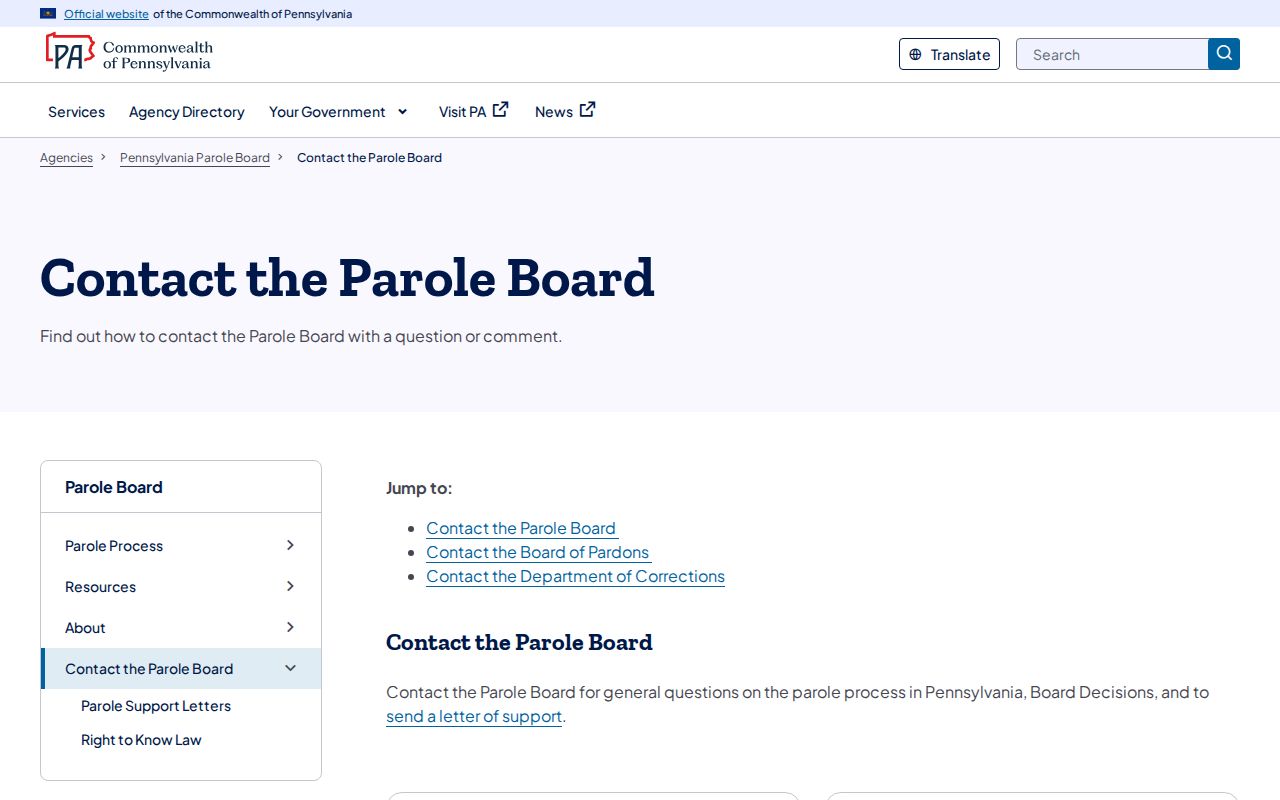
The page provides a process contact, not a public directory of confidential reporting details.
Lycoming Supervision Violations
Supervision conditions come from the controlling order and agency. A claimed violation does not itself prove a new conviction. It may lead to an investigation, warrant, hearing, added conditions, continuation on parole, or recommitment, depending on the authority and facts. Exact status should be taken from an official order, locator, warrant source, or agency response.
No maintained public Lycoming County absconder list was found on the official county pages reviewed. An absconder is someone alleged to have stopped reporting or evaded supervision. That label is not the same as “released with no supervision.” Do not substitute a commercial warrant page or social post. Search the docket, check the state locator for a state parolee, and contact the responsible office.
State violation hearings have defined timing rules. A detention hearing is generally held within 30 days of detention on a Board warrant unless an exception applies. A revocation hearing is generally due within 120 days of official conviction verification or return to an SCI, depending on the circumstance. These are hearing deadlines, not release dates.
The official revocation materials describe possible continuation on parole or recommitment. A displayed review month creates no right to release. If the state locator changes from a district office to an SCI, that location is strong public evidence of renewed institutional custody, though the Board action and hearing record explain the legal basis.
County supervision follows the Lycoming court instead. A county warrant or violation order should be checked on the docket and through the responsible county office. The state Board's deadlines and outcomes must not be copied onto a county probation case merely because both involve community supervision.
Ending Lycoming County Supervision
Supervision ends through formal discharge, expiration, or another lawful order, not merely because a person is living in the community. For state parole, the maximum date is normally the outside sentence endpoint as calculated, but another sentence or detainer can continue custody. For county probation or parole, the Lycoming docket and filed order supply the controlling term and any later change.
A PA DOC “Release Date” confirms release from state prison, not the end of state parole. Likewise, a county discharge from the prison does not erase a probation or county-parole term. Seek a discharge order, sentence-status record, or final docket entry when proof of completed supervision is needed.
Sealed, expunged, and Clean Slate limited-access cases may disappear from public UJS Case Search. An absent case is not proof that supervision never existed or ended on a guessed date. Respect the access limit and contact the record custodian for lawful access to a person's own matter.
Lycoming State Parole Review
State parole review is not published as a Lycoming County courthouse calendar. The Pennsylvania Parole Board processes cases through institutional review and interviews, but it does not provide a public person-by-person future interview calendar. The Board of Pardons calendar concerns clemency and must not be used as a parole schedule.
The official parole interview page is the correct process source and is shown below.
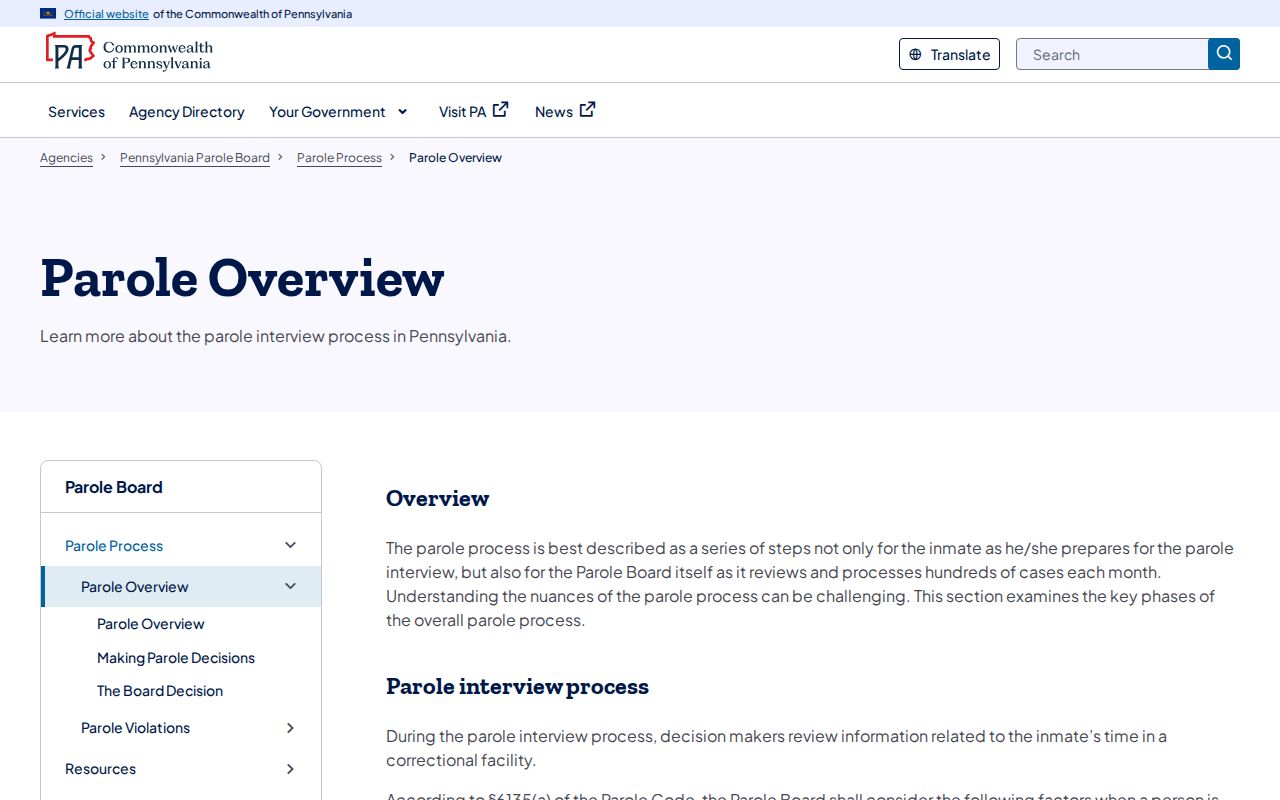
Possible Board outcomes include grant, denial, continued review, deferment, or rescission before physical release. A grant does not promise same-day departure because DOC processing, legal holds, and approved-plan conditions may remain. A future review month is not a new maximum date or a right to release.
Lycoming Parole Status Alerts
PA SAVIN, delivered through VINELink, covers county jails, state prisons, and state parole. It can provide release, move, or escape notifications from participating systems. Search the exact person, verify the reporting agency, and choose “Get Notified” only on the matching result. A notification is a prompt to check the responsible record, not certified proof of discharge.
Registration can use web, app, or phone. Telephone notices use a four-digit PIN, followed by the pound key to acknowledge the call. PA SAVIN's main number is 866-972-7284 and TTY is 866-847-1298. State-prison and state-parole registered victims can also contact the Office of Victim Advocate at 800-563-6399 for expanded notification services.
Alerts can lag or fail, and a move from one custodian may be a transfer. Check the locator, docket, Board action, or facility record before treating an alert as a complete account of the person's status.
Note: Registry status, parole status, and current custody are three different legal and record questions.
Lycoming Reentry After Supervision
The Lycoming County Re-Entry Coalition is a local resource-coordination point. The county says it began in 2015 and was reestablished in 2021 through a partnership with GEO Reentry Services and the In-Prison Reentry Program. Its role is program navigation, not verification of parole, probation, or discharge.
Nicole English, Re-Entry Program Manager
330 Pine Street, Suite 104
Williamsport, PA 17701
Phone: 570-323-1274
The official coalition page is the source for current navigation details. Contact the supervising authority for a legal status question and the coalition for program coordination.
Release planning and legal supervision can overlap without being the same service. A program contact may help route practical needs, while only the court, PA DOC, Board, or county supervision office can establish the controlling legal status. Keep both contacts current and direct each question to the office that holds the record.
A registry result is also separate. Pennsylvania's Megan's Law site is limited to people subject to that offense-specific registration law. A registrant may not be on parole, and a parolee may not appear in the registry. Absence from either system cannot settle the other status.