
Lycoming Projected Versus Actual Release
A projected or anticipated date is an agency calculation or planning date based on the current sentence record. Actual release is the event when the facility processes the person out or transfers custody. Pennsylvania also has an earlier concept: parole eligibility. The court-set minimum is generally the first point at which ordinary state parole may occur. It is not a promise that the person will leave then.
A pretrial detainee has no sentence-based projected date. Bail may be posted, charges may change, or a court may act, but another detainer can still prevent community release. For a sentenced person, the minimum, maximum, custody credit, concurrent or consecutive terms, parole action, and holds all matter.
- Eligibility date
- The earliest legal point for a release decision, not a guarantee.
- Anticipated date
- A current agency calculation obtained from an authoritative record.
- Actual release
- The completed custody event recorded by the releasing authority.
Find Lycoming Projected Release Dates
Start with the court record and identify whether the sentence is county or state. The UJS docket summarizes the sentence, but the filed sentencing order is controlling. For a state sentence, PA DOC calculates minimum and maximum dates. For a county term, the Lycoming court and county authorities control applicable parole and release orders.
- Find every criminal docket in the UJS Case Search.
- Obtain each sentencing order and list minimum, maximum, and concurrent or consecutive terms.
- Verify credit for prior custody and check for another docket or detainer.
- Identify county versus state custody and any court-imposed RRRI minimum.
- For state custody, check the PA DOC locator and request the sentence-status record if needed.
- For county custody, contact Lycoming County Prison and the Clerk for the calculation and orders.
- Confirm the completed event through PA SAVIN and the discharge record.
The Lycoming County released-inmate search shows the wider custody-verification route. Use a DOC number or docket number whenever possible because name alone can combine different people.
Lycoming Sentence Date Calculation
Pennsylvania does not have one public formula for every county and state prisoner. Under 42 Pa.C.S. § 9756, an indeterminate sentence states a minimum and maximum, with the minimum generally no more than half the maximum. Section 9760 governs credit for qualifying time already spent in custody.
For an ordinary state sentence, 61 Pa.C.S. § 6137 generally prevents the Board from granting parole before the minimum. The maximum is the outside endpoint as calculated, unless another lawful basis keeps the person in custody. Neither date alone predicts the day the gate will open.
Lycoming County terms follow the sentencing docket and applicable county-parole orders under 42 Pa.C.S. §§ 9775–9776. The Pre-Release Center is a placement and program, not an earned-time formula. No official Lycoming source reviewed publishes a county good-time table, automatic weekend-release rule, or public sentence calculator.
Why Lycoming Release Dates Change
A date can move because the facts or legal calculation change. Correction of custody credit can alter the sentence computation. An appeal or amended order can change the sentence itself. Parole may be denied or deferred. A detainer can prevent community release even when one sentence reaches an expected point.
| Factor | Effect | Record to check |
|---|---|---|
| Custody credit correction | Moves calculated minimum or maximum | Order and sentence-status record |
| Concurrent or consecutive terms | Changes total time structure | All sentencing orders |
| Parole grant, denial, or deferment | Changes release path, not court maximum | Public Board action |
| Detainer or warrant | May continue custody elsewhere | Receiving authority and docket |
| Misconduct or program eligibility | May affect an alternative release path | Authoritative agency record |
| Recommitment or new conviction | Can produce a new computation | Board action and new docket |
An incomplete release plan can also delay physical departure after a favorable decision. Record the date and exact label from each source. Do not turn a review month into a projected release date.
Confirm Lycoming Release Dates
PA SAVIN through VINELink can send notice of release, movement, or escape for participating county and state systems. Search the correct person, verify the reporting agency, and choose “Get Notified.” Web, phone, and app registration are available. Telephone notices use a four-digit PIN.
An alert is not a certified release record. It may lag, fail, or describe a move to another custodian. For a county prisoner, call Lycoming County Prison at 570-326-4623 and seek the discharge entry. For a state prisoner, compare PA SAVIN with the daily PA DOC update and request the existing sentence-status or release record.
The detailed registration steps appear on the VINELink Check. For exact legal authority, return to the filed order or public Board action.
PA DOC Release Date Field
The live PA DOC public locator has an exact “Release Date:” field in the department-supervised or parolee view. Research did not find a public field labeled “Projected Release Date” or “Tentative Release Date.” Copy the label as shown. Do not convert a minimum date, maximum date, or parole-review month into a field the portal does not publish.
The official locator is updated daily rather than in real time. An SCI location means institutional custody continues. A parole status or district-office location means prison confinement ended while state supervision continues. County prisoners are excluded from this system.
The PA DOC locator and released-record detail is shown in the successful capture below.
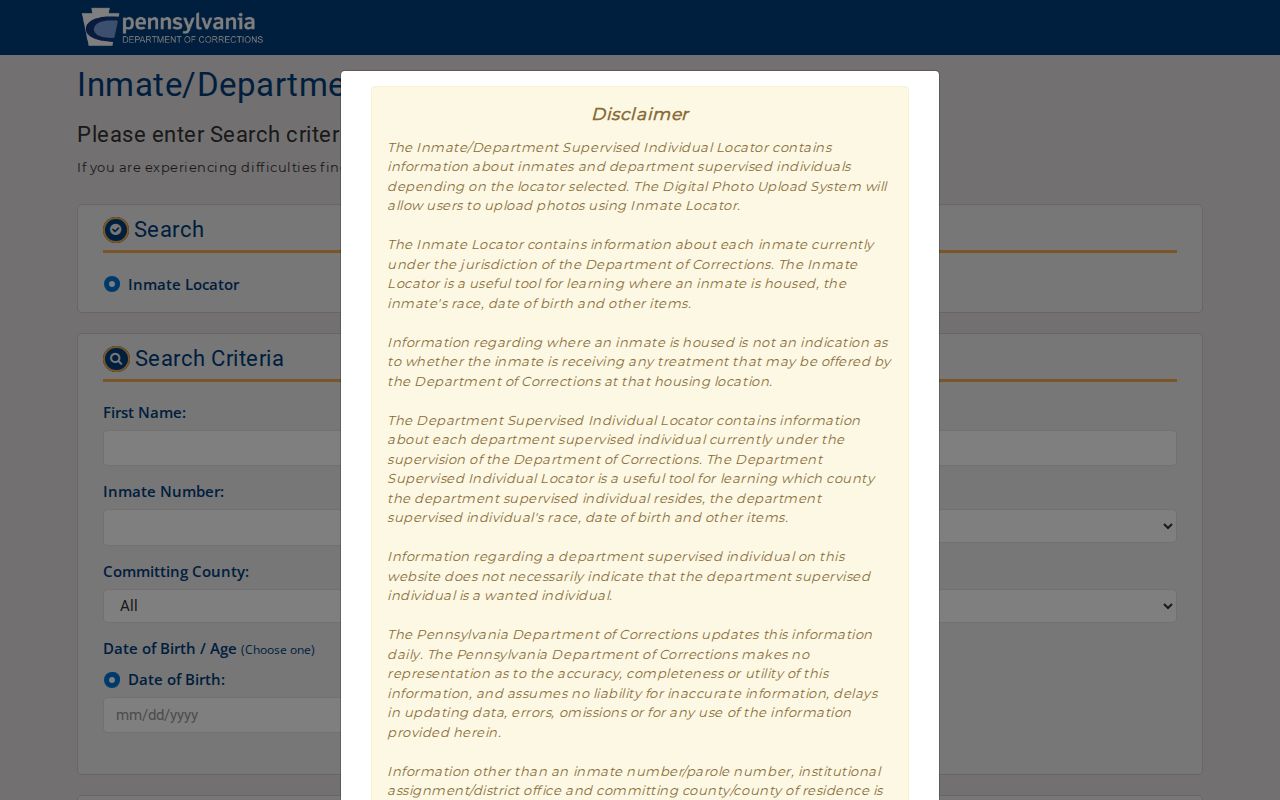
The captured field supports a completed release or parole record, not a public promise about a future exit.
No Lycoming 85 Percent Formula
The Pennsylvania Parole Board expressly says inmates are not required to serve 85 percent of the maximum sentence before parole. An “85 percent calculator” would therefore misstate Pennsylvania law. Ordinary eligibility begins with the court-set minimum, subject to the sentence and governing law.
RRRI under 61 Pa.C.S. Chapter 45 can create a shorter alternative minimum for an eligible person when imposed as part of the sentence. Eligibility excludes defined categories. Release still depends on required certification, conditions, and the decision process. RRRI is not universal good time that everyone earns at a fixed rate.
Short-sentence parole under § 6137.1 is another defined mechanism with eligibility, misconduct, and detainer exclusions. It also cannot be turned into a countywide percentage. Ask whether the actual sentencing order contains the relevant term or program.
County Versus State Release Dates
Lycoming County Prison and the county Pre-Release Center use the county and court trail. A move from the prison to the center continues county placement. A state commitment moves the record into PA DOC. SCI Muncy is a state institution, even though it is in Lycoming County, and its release date belongs to the state record.
| Custody | Date authority | Public route |
|---|---|---|
| Pretrial county | Bail, court action, holds | Docket, PA SAVIN, prison |
| County sentence | Sentencing and parole orders | Docket, Clerk, prison record |
| State sentence | Sentencing order and DOC computation | PA DOC, Board action, PA SAVIN |
| Federal sentence | Federal judgment and BOP computation | BOP locator and federal docket |
The systems should never be blended. A blank county result may mean transfer to state or federal custody. It does not prove release to the community.
Lycoming County Prison uses PA SAVIN as its public inmate-search route, but no official county page publishes a projected-date field or a historical date calculator. Call the prison for current custody and records routing. For filed sentencing or parole orders, the Lycoming Clerk of Courts criminal line is 570-327-2272, with listed weekday hours from 8:30 a.m. to 5 p.m.
PA DOC is different. Its sentence calculation is based on state records and the sentencing orders, while the Parole Board decides whether release on parole will occur after eligibility. The locator's daily cadence should not be attributed to the county or to PA SAVIN. A same-day custody alert may therefore precede the next state locator update.
Note: Identify the operator and sentence before deciding which release-date record controls.
Parole Review Is Not Release
The Pennsylvania Parole Board does not publish a person-by-person future interview calendar. Its process page describes institutional review and interviews, while a public Board action communicates grant or refusal. Monthly statistics are not individual case results, and the Board of Pardons calendar concerns a different clemency process.
A grant may still be followed by DOC processing, legal holds, and release-plan conditions. A denial or deferred review does not create a new maximum date. Rescission can withdraw an earlier grant before release. After a violation, continuation or recommitment may change the custody path.
The official Pennsylvania parole interview process appears in the capture below.
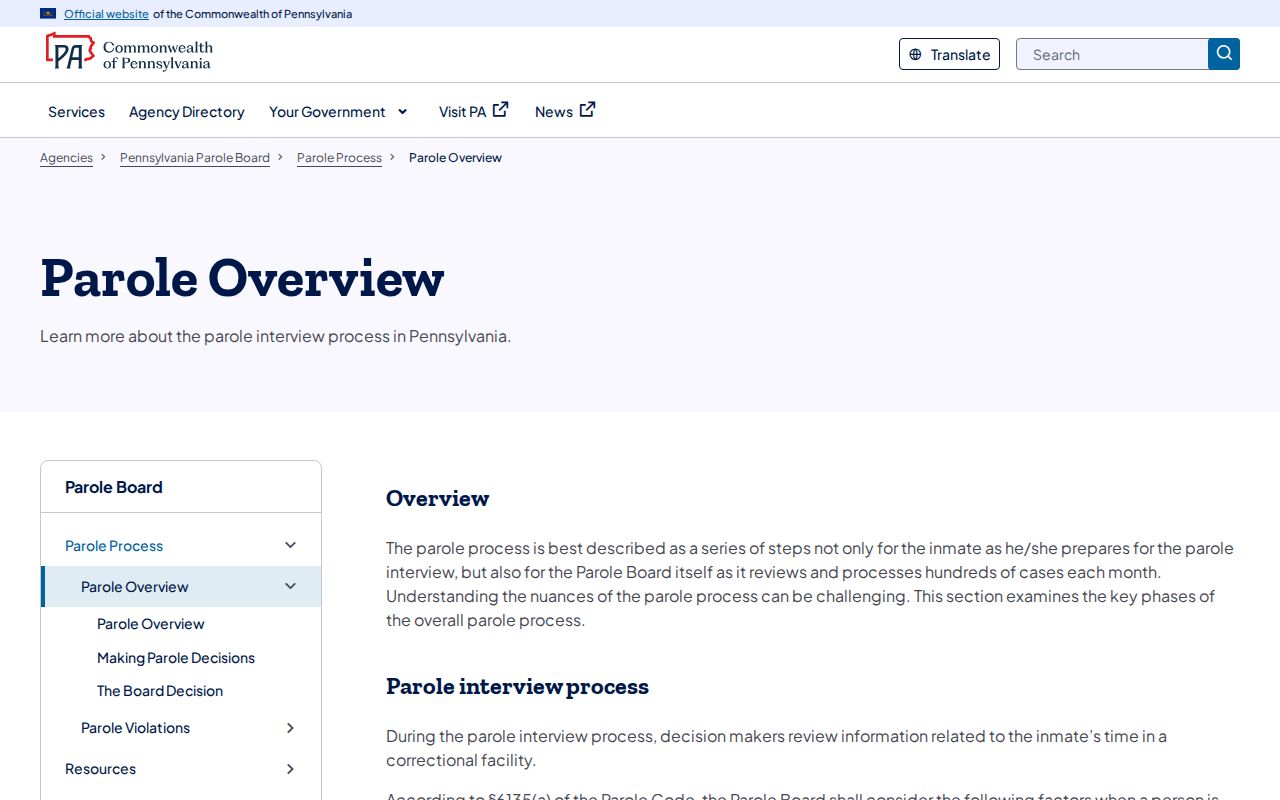
The process image is useful for identifying the stage, but no review stage alone establishes when physical release will occur.
Eligibility under 61 Pa.C.S. § 6137 ordinarily cannot occur before the court-set minimum. Death and life-imprisonment sentences are outside ordinary Board parole power. Statutory short-sentence parole and RRRI have distinct requirements, so neither can be assumed from sentence length alone.
Violation review follows another timeline. Detention and revocation hearing deadlines protect process, but they are not scheduled releases. A recommitment decision can cause DOC to recalculate dates. The official revocation page specifically warns that a review month is not a right to leave custody.
Lycoming Release Date Records
When the public sources do not answer the calculation, obtain the authoritative documents. The sentencing order shows the court's terms. The docket can reveal later amendments and custody-credit action. A PA DOC sentence-status summary can explain the department's state calculation, while a county discharge entry records the completed Lycoming County Prison exit.
For PA DOC records, use the department's official Right-to-Know contact and identify the DOC number, facility, dates, and exact record. Ask for an existing public sentence-status or release record. Request the public Board action instead of confidential parole deliberations.
For a county record, call the prison first and then use Lycoming County's Right-to-Know route if writing is required. A focused request can seek the booking number, admission and release time, release category, authorizing court, and receiving agency if transferred. Ask for an existing record rather than a newly created prediction.
These records may answer different parts of the question. The court sets the term, the custodian calculates and processes it, and the discharge record proves the event. Keeping those roles separate is the safest way to resolve a date that appears inconsistent.